

20 April 2022
Ask anyone what to do in Singapore and the answer comes quickly: eat at the hawker centres. These open-air food courts are talked about as one of the world’s great eating experiences, so celebrated that hawker culture is on UNESCO’s list of intangible cultural heritage and one stall even earned a Michelin star. But does the reality live up to the reputation? I’ll give it to you straight, and I’m a fussy eater who avoids seafood and doesn’t hand out praise lightly: yes, it is one of the rare things that is exactly as good as everyone says.
This guide explains what a hawker centre actually is, whether it deserves the hype, and where and what to eat.
What a Hawker Centre Actually Is
A hawker centre is a covered hall of small, specialised food stalls, each perfecting one or two dishes, with shared tables in the middle. It is casual, cheap, and gloriously unglamorous, and that plainness is part of the charm. It grew out of Singapore’s move to bring street-food vendors under one hygienic roof, and today the centres are the beating heart of the city’s food culture, where office workers, families, and tourists all eat side by side.
The Food Delivers
The hype is earned. A few Singapore dollars buys food made by cooks who have refined a single recipe over decades. The dishes to seek out include:
- Hainanese chicken rice, the national dish, poached chicken with fragrant rice, so good it has its own Wikipedia entry. Tian Tian at Maxwell is the famous one.
- Laksa, a rich, spicy coconut noodle soup.
- Char kway teow, smoky stir-fried flat noodles.
- Satay, grilled skewers with peanut sauce.
The best stalls have queues, and the queues are worth joining. Full disclosure: I don’t do seafood, so I give the prawn-and-cockle dishes and the famous chilli crab a wide berth, and it still says everything that the chicken rice and satay alone had me completely sold.
Where to Eat
Two hawker centres are the obvious starting points:
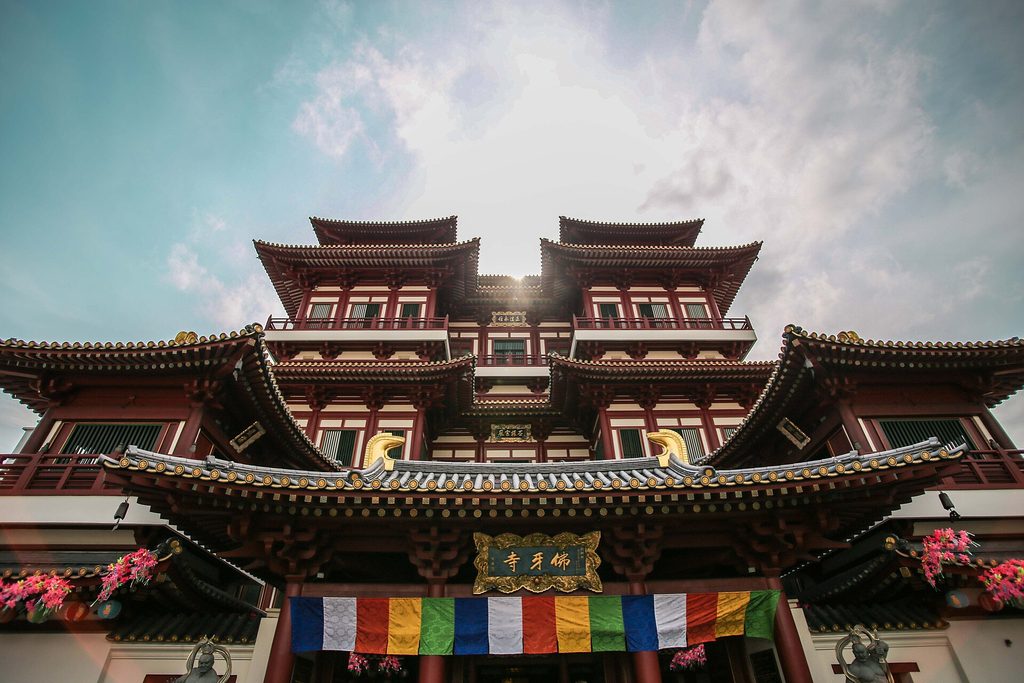
- Maxwell Food Centre, in the heart of Chinatown near the Buddha Tooth Relic Temple, has over 100 stalls and is the best known.
- Lau Pa Sat (“Old Market”), a beautiful cast-iron Victorian hall in the financial district, gathers local favourites and Michelin-mentioned brands under one roof, and its satay street comes alive in the evening.
Others worth seeking out include Old Airport Road, Tiong Bahru, and Chinatown Complex.
The Catch
It is hot, busy, and you often share a table with strangers while hunting for a free seat, a local ritual involves “choping” (reserving) a table with a packet of tissues. If you need air conditioning and calm, it can feel overwhelming. Visiting just before or after the lunch rush (roughly 12 to 2 pm) helps you find a seat. Lean into the chaos and it becomes the highlight of the trip.
Frequently Asked Questions
Is hawker food in Singapore worth it? Yes. The food is excellent and inexpensive, made by specialists who have perfected single dishes over decades. It is one of the world’s great affordable eating experiences.
What should you eat at a Singapore hawker centre? Start with Hainanese chicken rice, laksa, char kway teow, and satay. Follow the queues, the busiest stalls are usually the best.
Which is the best hawker centre in Singapore? Maxwell Food Centre in Chinatown and Lau Pa Sat in the financial district are the most famous and beginner-friendly, though locals love Old Airport Road and Chinatown Complex too.
Final Thoughts
Singapore’s hawker food is that rare thing: exactly as good as its reputation, and I say that as someone who travels on his stomach and doesn’t gush easily. Come hungry, skip the fancy restaurants, and eat where the locals queue. When you have had your fill of the city, the beaches of Bali are a short flight away, and Singapore’s airport makes it an easy hub for the wider region, much like a Doha layover on the way in.