

27 February 2024
Few places live up to their postcards quite like Zermatt. This car-free village in the Swiss canton of Valais sits directly beneath the Matterhorn, the most instantly recognisable mountain on Earth, and it has built a global reputation for skiing, mountaineering, and simply gawping at that perfect pyramid of rock. It is expensive and it is popular, but it earns both, and as a keen skier who’s also a sucker for a car-free town you cover on foot, it ticks a lot of my boxes.
This guide covers how to reach the car-free village, the mountain railways and viewpoints, the skiing, and the best time to go.
A Car-Free Village
Zermatt bans combustion-engine cars, which gives the village much of its charm and clean mountain air. If you drive, you park down-valley in Täsch and take the short shuttle train up; from the station, small electric taxis and your own two feet do the rest. The result is a compact, walkable village of chalets, church spires, and mountain views at every turn, described well in National Geographic’s guide.
The Great Mountain Railways and Viewpoints
You do not need to ski to experience the high mountains here. Two engineering marvels do the work:
- Gornergrat. A red cogwheel train climbs from beside the main station to a ridge at over 3,000 metres, with a jaw-dropping panorama of the Matterhorn, the Monte Rosa massif, and a sea of glaciers. It is one of the great train rides in the Alps, and I’d ride it for the engineering alone, never mind the view.
- Matterhorn Glacier Paradise. A series of cable cars carries you up to the Klein Matterhorn, at 3,883 metres the highest cable-car station in Europe, where an ice palace of sculptures sits beneath the surface and the view spans three countries.
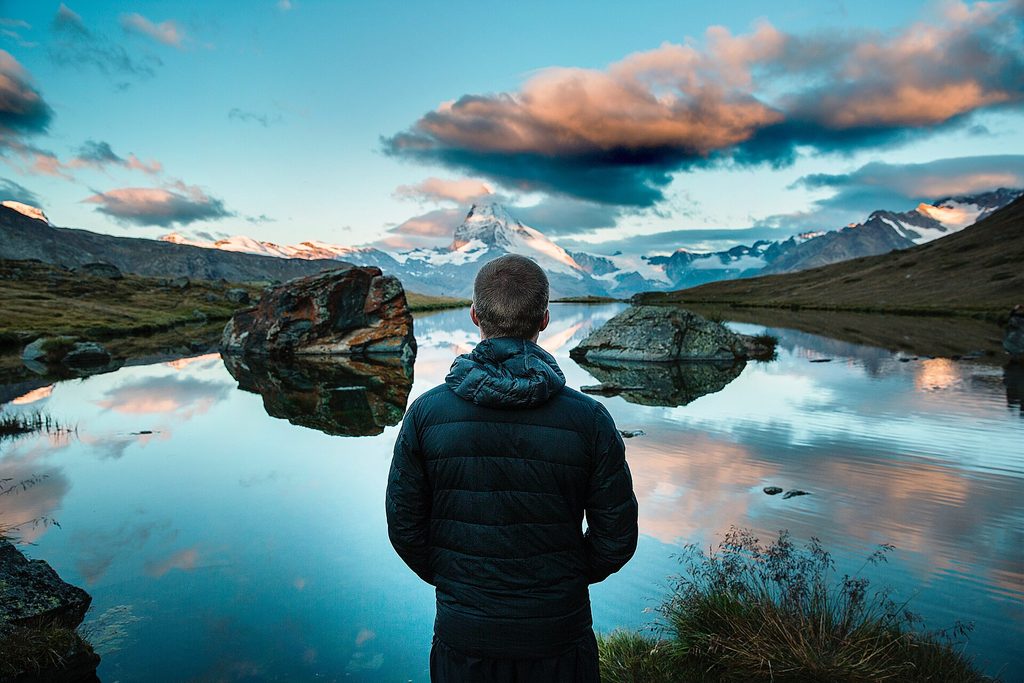
For the classic reflected-Matterhorn photograph, hike or ride to the Riffelsee lake near Rotenboden on a still morning. The official Zermatt tourism site lists the must-sees.
World-Class Skiing
Zermatt is one of Europe’s premier ski resorts, with three linked areas, Gornergrat, Sunnegga-Rothorn, and Matterhorn Glacier Paradise, offering enormous terrain, superb off-piste, and lifts connecting over the border to the Italian resort of Cervinia, skiing from Switzerland into Italy for lunch is exactly the sort of thing I travel for. Thanks to its glaciers and altitude, it even offers summer skiing, a rarity in the Alps.
When to Go and What Else to Do
Zermatt is a genuine year-round destination:
- Winter (roughly December to April) is prime ski season.
- Summer brings spectacular hiking, from gentle valley walks to serious alpine routes, plus that summer glacier skiing.
Non-skiers are well catered for too, with sledging runs, winter walking trails between mountain stations, glacier tours, and fondue with a view. More background is on the village’s Wikipedia page.
Frequently Asked Questions
Is Zermatt really car-free? Yes. Combustion-engine cars are banned; visitors park in Täsch and take a short train up, then get around the village on foot or by electric taxi.
Do you need to ski to enjoy Zermatt? Not at all. The Gornergrat railway and the cable cars to Matterhorn Glacier Paradise give non-skiers access to spectacular high-mountain views, and there is summer hiking and winter walking too.
When is the best time to visit Zermatt? December to April for skiing, and summer (June to September) for hiking and mountain views. The village is beautiful year-round, weather permitting.
Final Thoughts
Zermatt delivers on the dream of the Alps: a car-free village of wooden chalets, the perfect pyramid of the Matterhorn overhead, and some of the finest mountain railways and skiing in the world. It is not cheap, but few places are as purely spectacular. Pair it with lakeside Geneva or an Italian leg via Milan for an unforgettable alpine trip.