

25 October 2022
Milan has an image problem among travellers. Next to Rome, Florence, and Venice, Italy’s second city is often dismissed as a place of banks, business, and boutiques, somewhere you fly into and leave as quickly as possible. That reputation sells it short, though I’ll be honest that I’m no fashion or art obsessive myself. Milan is worth visiting, provided you know what it is and what it is not: a city of quiet elegance and world-class treasures rather than obvious postcard beauty.
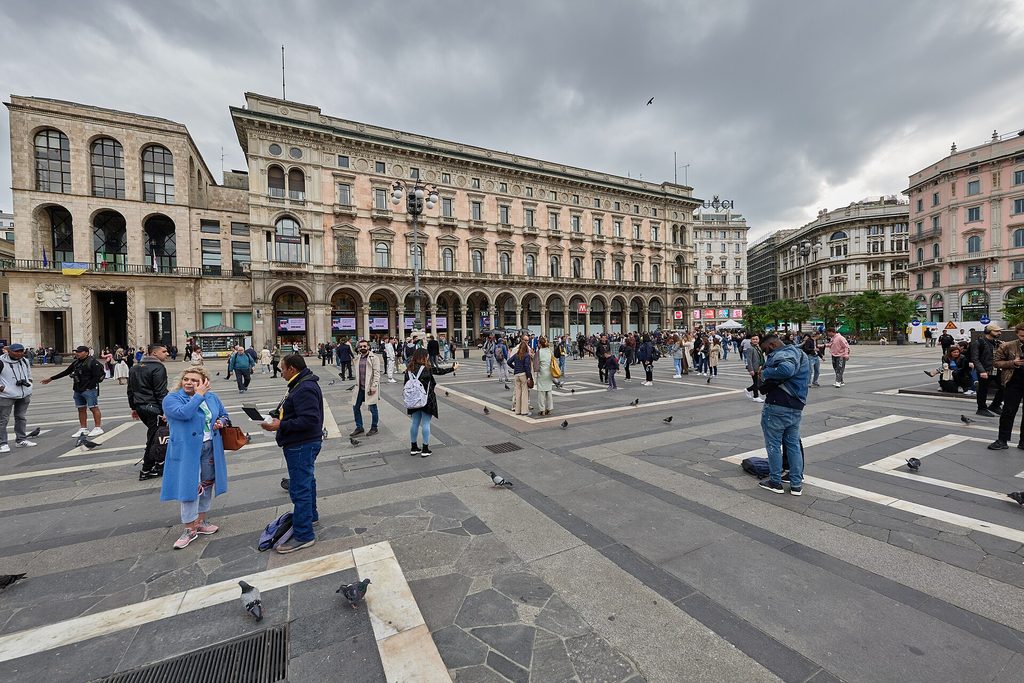
This guide covers what makes Milan worth a stop, its must-see sights, and how much time to give it.
The Duomo Alone Justifies the Trip
Milan’s cathedral, the Duomo, is one of the most extraordinary buildings in Europe. A vast Gothic confection of white marble that took some six centuries to complete, it bristles with thousands of statues and spires. The real highlight is climbing to the rooftop terraces, where you can walk among the pinnacles with views over the city to the Alps on a clear day. I don’t get misty-eyed over cathedrals as a rule, but the sheer engineering of this one, six centuries of it, won me over completely, and on its own it makes the case for a visit.
Leonardo’s Last Supper
Milan is home to one of the most famous paintings in the world: Leonardo da Vinci’s The Last Supper, painted on the wall of the refectory at Santa Maria delle Grazie. Access is strictly limited, small groups for just fifteen minutes, so tickets sell out months in advance. If seeing it matters to you, book as early as you possibly can; it is not something you can decide to do on the day.
Elegance, Fashion and the Galleria
Even without a shopping budget, Milan’s style is a pleasure. The Galleria Vittorio Emanuele II, a soaring nineteenth-century arcade of glass and mosaic beside the Duomo, is often called the city’s living room; Wikipedia traces its history as one of the world’s oldest shopping galleries. Nearby, the Quadrilatero della Moda, the fashion quadrangle around Via Montenapoleone, is where the great houses, Prada, Armani, Versace, keep their flagship stores.
Beyond the labels, the real character of Milan lives in its neighbourhoods: the canals and nightlife of the Navigli, the galleries of Brera, and the hidden courtyards of its elegant apartment blocks. Time Out’s guide to the city is good for current openings and events.
How Long to Stay
Milan is compact and its highlights are central, so one to two days is plenty for a first visit. That is enough for the Duomo, the Galleria, the Last Supper if you have booked, and an evening aperitivo along the Navigli, which, as a pasta lover with a soft spot for a good cocktail, was my favourite part of all. It also makes an excellent base or stopover: it is a major rail hub, and I’ll happily invent excuses to ride Italy’s Frecciarossa high-speed trains, which whisk you to Venice and the rest of Italy, and it sits close to the Alps and the lakes.
Frequently Asked Questions
Is Milan worth visiting? Yes. While it lacks the obvious beauty of Rome or Florence, Milan offers the spectacular Duomo, Leonardo’s Last Supper, elegant shopping arcades, and a stylish, sophisticated atmosphere. One or two days is ideal.
How many days do you need in Milan? One to two days covers the main sights comfortably, including the Duomo rooftop, the Galleria, and the Last Supper if you have pre-booked tickets.
Do you need to book the Last Supper in advance? Yes, well in advance, often two to three months. Only small groups are admitted for fifteen minutes at a time, so tickets are very limited.
Final Thoughts
Milan rewards travellers who arrive with the right expectations. Come for the Duomo and the Last Supper, enjoy the effortless style, and treat it as a stylish gateway to the rest of northern Italy and the Alps, from the canals of Venice to the peaks around Zermatt. See the fuller picture on the city’s Wikipedia page, and you will find Milan is far more than fashion and football.