

29 August 2023
For most of the year, the Namaqualand region around Springbok is dry, rugged semi-desert in South Africa’s remote Northern Cape. But for a few short weeks each spring, it transforms into one of the most spectacular wildflower displays on Earth, carpeting the hills and plains in orange, white, and purple. Timing a visit to catch the Namaqualand flowers takes a little planning, but the reward is a genuine bucket-list spectacle, and doing it the way I love best, a slow self-drive with frequent stops, is half the pleasure.
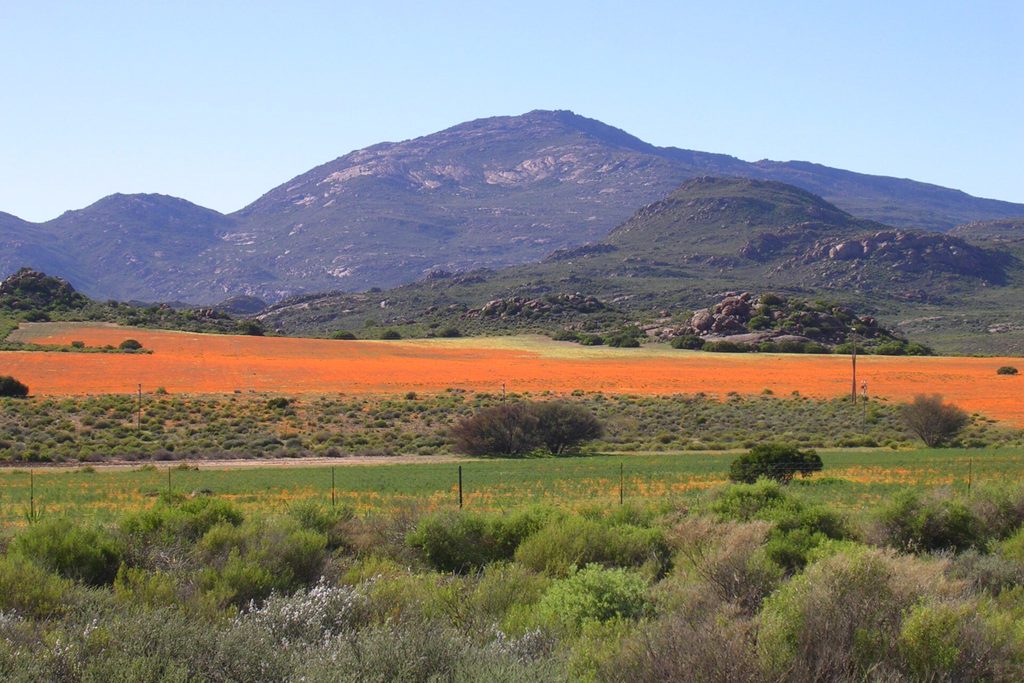
This guide covers when and where to see the bloom, how to make the most of it, and why Springbok is the place to base yourself.
Timing Is Everything
The Namaqualand flower season runs from roughly early August to late September, with the peak near Springbok usually in early to mid-August. But the display depends entirely on the winter rains, so it shifts from year to year and can be disappointing in a dry season. A little flexibility with your dates pays off, and it is worth checking the latest flower reports before you travel. The official Northern Cape wild flower route is a good place to gauge the season.
Follow the Sun
There is a knack to viewing the flowers. The daisies and other blooms open to face the sun, a neat bit of botany that the science nerd in me thoroughly enjoyed, so the display is at its best in the middle of a bright, warm day, roughly from late morning until mid-afternoon. On overcast or windy mornings the flowers stay firmly shut. For the best photos, drive with the sun behind you so the carpets of colour face your camera. The Namaqualand flower route guide has more on the main viewing areas.
Goegap Nature Reserve and Beyond
The best single spot near town is the Goegap Nature Reserve, a 15,000-hectare expanse of granite outcrops, plains, and sculptural quiver trees just outside Springbok. It protects some 600 indigenous plant species and is home to springbok, gemsbok, and mountain zebra, with a 17-kilometre circular drive taking you through the flowers.
Further afield, the Namaqua National Park near Kamieskroon, about an hour south, is another famous flower destination, its Skilpad section renowned for dense orange carpets. Between them, the region rewards slow driving and frequent stops. Background on the wider region is on the Namaqualand Wikipedia page.
Springbok as a Base
The mining town of Springbok is the practical hub for the whole region, with the reserves nearby and routes fanning out into the flower fields. It is functional rather than pretty, and accommodation is limited, so book well ahead in flower season. More on the town is on its Wikipedia page.
Springbok also sits on the N7, the main road north, making it the last major South African town before the Namibian border. Travellers heading onward can continue into Namibia toward the ghost town of Kolmanskop near Lüderitz and the quiver tree forest at Keetmanshoop, while Cape Town lies a long day’s drive to the south.
Frequently Asked Questions
When is the best time to see the Namaqualand flowers? Roughly early August to late September, with the peak near Springbok usually in early to mid-August. The exact timing depends on the winter rains.
Where is the best place to see flowers near Springbok? The Goegap Nature Reserve just outside town is the top spot, while Namaqua National Park near Kamieskroon to the south is another famous flower destination.
Why do the Namaqualand flowers only open during the day? The blooms open to face the sun and close in cool or cloudy conditions, so they are best viewed on warm, sunny days from late morning to mid-afternoon.
Final Thoughts
The Namaqualand bloom is a genuine natural wonder, and Springbok is the place to base yourself for it. Time your visit to the season, chase the sun across the flower fields, and you will witness a desert transformed into a sea of colour that you will never forget.