

12 September 2026
Johannesburg has one of the worst reputations of any city I'd actually recommend. Most visitors land at OR Tambo, change planes and head for Cape Town or Kruger, and honestly a lot of them are right to. So here's the honest case. If you want beaches, scenery or an easy city break, skip it. If you want to understand South Africa, give it two days, take the security advice seriously, and use it for what it does better than anywhere else: telling the country's recent history.
The Case for Stopping
Cape Town is prettier. Everyone agrees with that, and nobody in Johannesburg will argue. But if your trip is Table Mountain, a wine farm and a safari, you've seen the beautiful version of the country and missed the story that explains it. That story is here.
The Apartheid Museum
This is the single best reason to stop. The Apartheid Museum, which opened in 2001 near Gold Reef City, sorts visitors at random into "white" and "non-white" entrances with their ticket. It's a small gesture, and it lands. Wikivoyage calls it very moving and informative, and you don't need a guide. Allow at least half a day, and don't schedule anything cheerful straight after it.
Constitution Hill
Constitution Hill is the former Old Fort prison complex, which held Mahatma Gandhi in 1906 and Nelson Mandela in 1962, among many others. South Africa's Constitutional Court now sits on the same ground, in a building that used bricks from the demolished awaiting-trial block. As a piece of symbolism it's hard to beat, and it's the other site I'd insist on.
Soweto
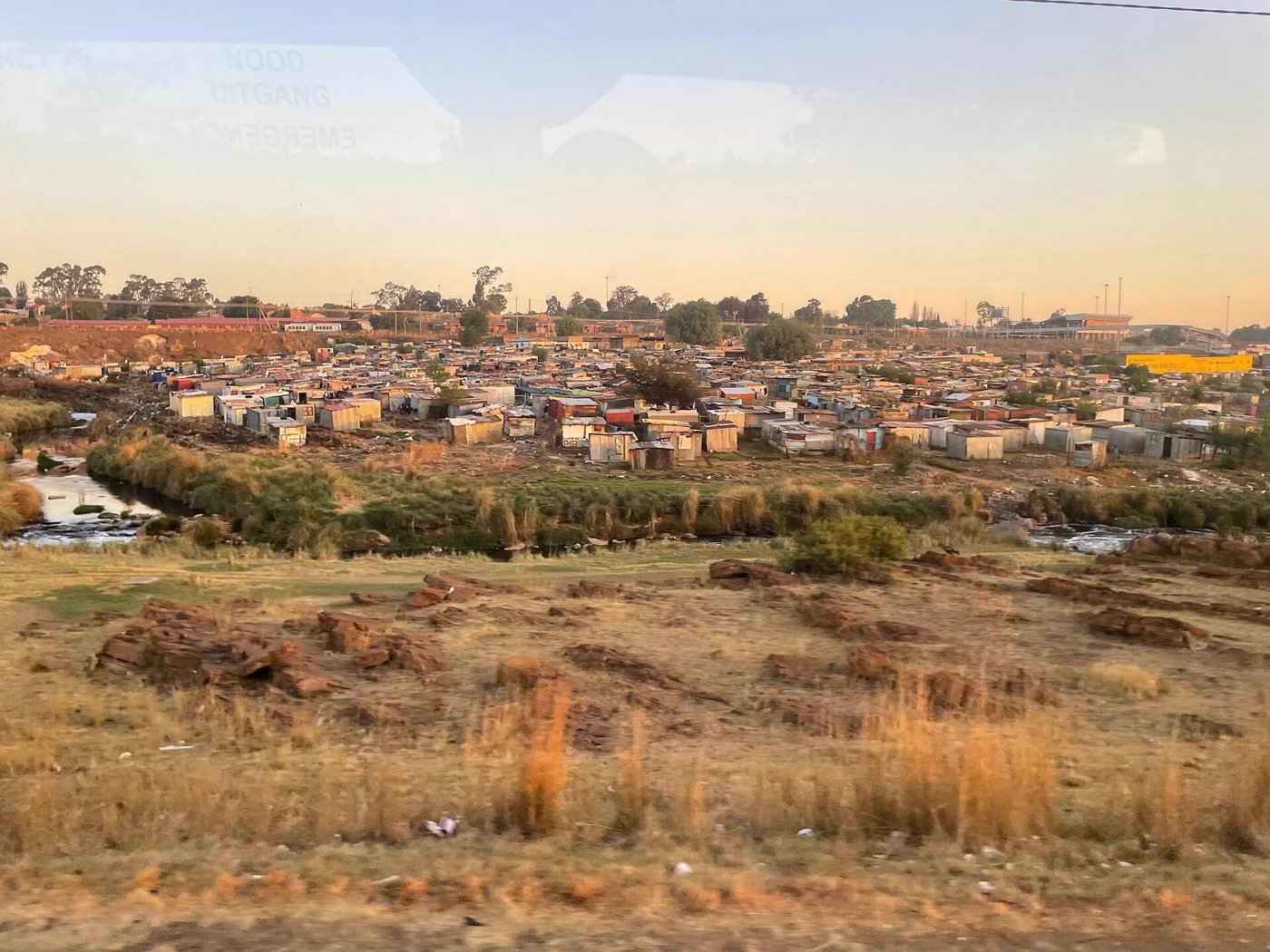
Roughly half of Johannesburg's urban population lives in Soweto and nearby suburbs, and it's far more varied than its name suggests to outsiders. Vilakazi Street is the usual focus. Here I'd follow the safety advice closely: the FCDO says to visit townships only with a responsible, reliable guide, and Wikivoyage says to use official operators and not to go alone. A good tour isn't just safer; you'll learn far more.
Maboneng and the Inner City Revival
Maboneng is the regenerated precinct on the eastern side of the inner city, with a Sunday market at Arts on Main and an independent cinema. It has 24-hour security inside the precinct, and Wikivoyage's advice is not to stray too far. Treat it as a pocket, not an invitation to wander, and go with someone who knows the area if you want to see more.
The Cradle of Humankind
If you have a spare half-day, the Cradle of Humankind World Heritage Site lies northwest of the city, with the Sterkfontein Caves and fossil finds such as Mrs Ples and Little Foot. It's the moment on this trip when the deep-time science-brain in me perks right up.
The Honest Part: Safety
I'll say it directly. Crime is a real issue here, and it would be irresponsible to pretend otherwise. The practical advice is consistent across sources:
Leaving OR Tambo. The FCDO reports that criminals have followed travellers from the airport and robbed them, often at gunpoint. Use main roads, move quickly through public areas, and arrange for your hotel or tour operator to meet you if you can.
Driving. Carjacking and robbery are common, especially after dark at traffic lights, junctions and petrol stations. Doors locked, windows up, valuables out of sight. Wikivoyage suggests avoiding the Vincent Tshabalala Road route through Alexandra.
Don't resist. If robbed, hand things over. Attackers may be armed.
Don't walk at night, and be cautious about walking in general outside well-known precincts.
Emergency numbers. 10111 for police, 112 from a mobile.
Tourist areas are generally well protected, and many people visit without incident. But I'd be doing you a disservice if I implied otherwise. Choose your hotel area carefully and treat your evenings as door-to-door affairs.
Getting Around
Johannesburg is built around cars, and public transport is limited. The good news:
The Gautrain links OR Tambo, Sandton and Pretoria quickly and is generally considered the safer option. The FCDO still says don't walk to or from stations after dark, and Wikivoyage advises against getting off at Marlboro. Airport trips carry a surcharge, so a ride-hail can work out cheaper for groups.
Ride-hailing is reliable, and likely to be your main transport. Uber and Bolt both operate.
Self-drive is possible for confident drivers, though avoid peak hours and read the carjacking advice above.
Minibus taxis are cheap and everywhere, but they're not for first-timers.
How Long Should You Stay?
Two days. One for the Apartheid Museum and Constitution Hill, one for Soweto with a guide and either Maboneng or the Cradle of Humankind. Add a day trip to Pretoria if you're here for the jacaranda season, or if you want a quieter day. If you're only connecting, it's fine to skip all of this. Just know what you're skipping.
Frequently Asked Questions
Is Johannesburg worth visiting? For two days and a focus on history, yes. It offers the Apartheid Museum, Constitution Hill and Soweto, but it isn't the place for beaches or an easy city break.
Is Johannesburg safe for tourists? Crime is a serious concern, and the FCDO warns of armed robbery and carjacking. Many visitors have no trouble, but you must take precautions, use reliable transport and stick to known areas.
How many days do you need in Johannesburg? Two days covers the main history sites. Add a day if you want the Cradle of Humankind or Pretoria.
Is Johannesburg or Cape Town better? For scenery and beaches, Cape Town. For understanding South Africa's history and political story, Johannesburg.
Can you visit Soweto safely? Yes, with a responsible guide or tour operator. Don't go alone, and don't visit townships on foot after dark.
Final Thoughts
Johannesburg doesn't ask to be liked, and it won't be everyone's favourite stop. But I think two days here will do more for your understanding of South Africa than two more days on a beach. Stay smart about it, and treat the museum visits as the point rather than something to fit in before your connection.